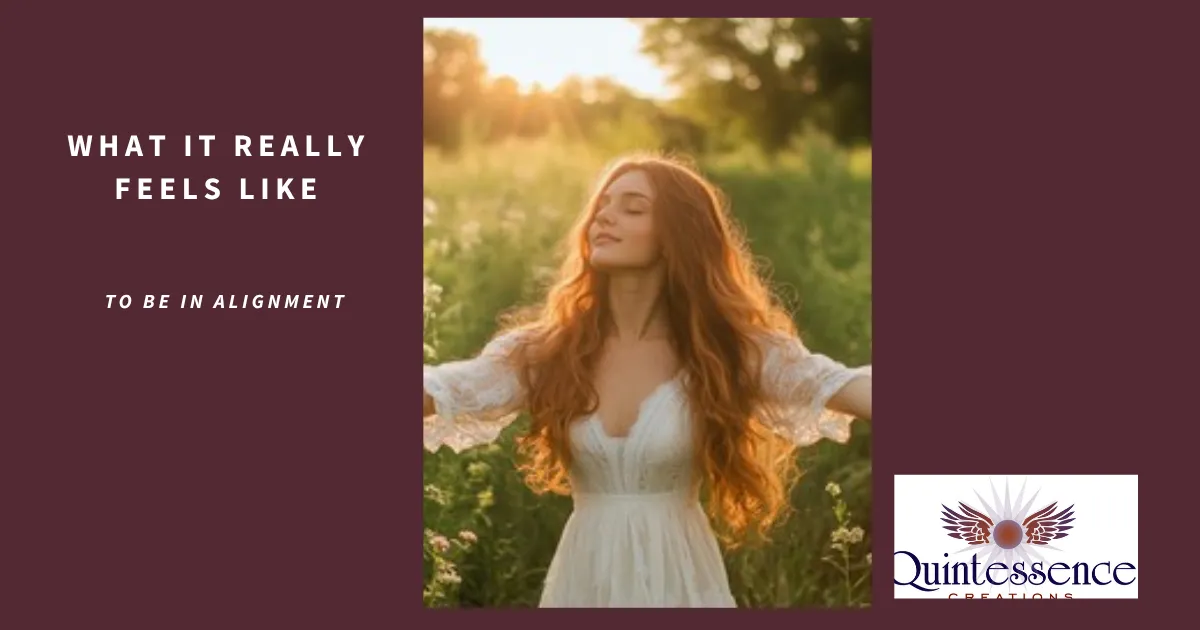
What It Really Feels Like to Be in Alignment
Alignment can sound like a spiritual idea, but in everyday life it often feels much simpler.
It may show up as feeling more connected to yourself, more aware of what matters to you, and more able to recognize when a choice feels like your own rather than something you are doing because you think you should.
It does not mean you always feel peaceful, confident, or certain.
It’s not about everything being perfect—it’s about feeling connected to yourself as you move through life.
What Greater Alignment Can Feel Like
You feel more connected to yourself
You notice your own preferences instead of automatically overriding them
You have greater awareness of what feels natural and what feels forced
You can experience difficult emotions without assuming something is wrong
You trust yourself enough to take a next step even when you do not have every answer
What Feeling Out of Alignment Can Look Like
You keep saying yes when part of you wants to say no
You make choices based mainly on what other people need or expect
You second-guess preferences that used to feel natural
You feel disconnected from what excites or interests you
Your life looks fine, but something inside feels off
Why Alignment Matters
Alignment is not about creating a life without difficulty.
It is about building a stronger relationship with yourself so that your choices increasingly reflect who you are, what matters to you, and what you genuinely want to experience.
That self-awareness can help you respond differently to your emotions, recognize possibilities you may have overlooked, and begin moving forward more intentionally.
Moving Forward
Alignment isn’t something you chase — it is something you can begin returning to.
And that return starts with understanding yourself more clearly.
Before deciding what needs to change, begin by noticing your natural strengths, preferences, patterns, desires, and the parts of yourself that may have had less room over the years.
Meet Your Authentic Self gives you a structured place to begin that process through a 120-question assessment and guided reflection experience.


